"My rule was I wouldn't recruit a kid if he had grass in front of his house.
That's not my world. My world was a cracked sidewalk." —Al McGuire

Thursday, November 19, 2020

Butler Preview, 2020-21

Butler Bulldogs


Coach: LaVall Jordan (70-64, 59-40 at Butler)

3-Year NCAA Ranking Average: 41.3

3-Year kenpom Average: 39.0

2020-21 T-Rank Projection: 74

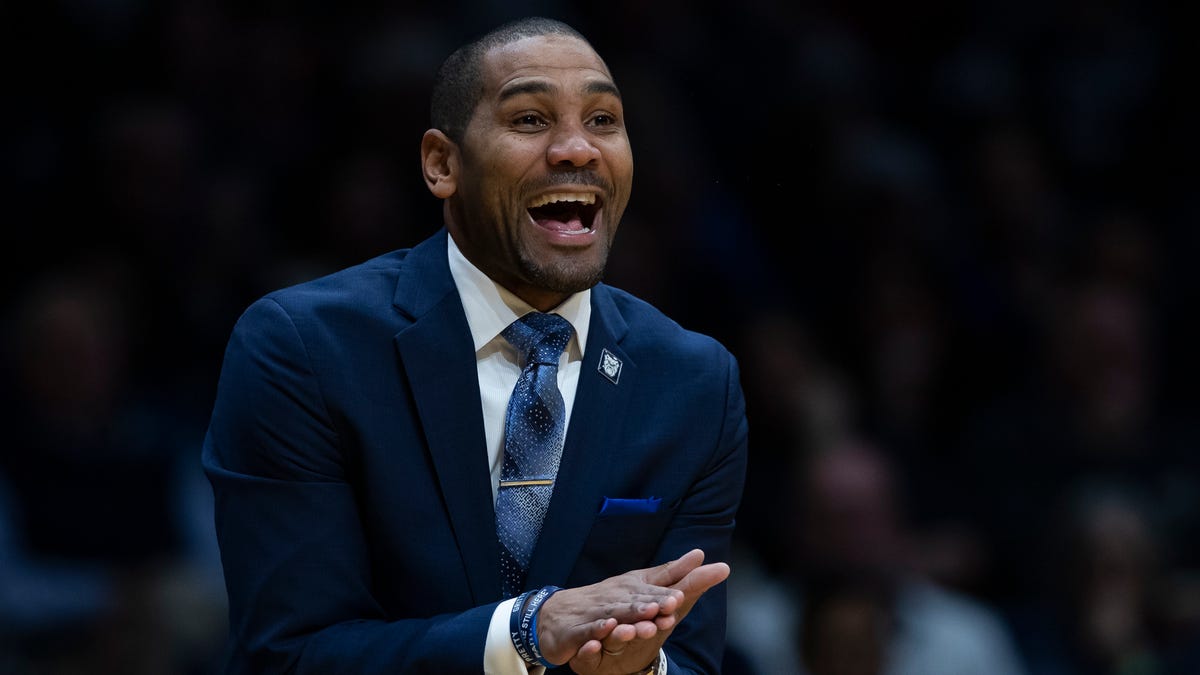
LaVall Jordan needs to find new production this year

Photo from IndyStar.com

Projected Starters: PG Aaron Thompson (6'2" Sr), SG Jair Bolden (6'3" RS Sr), SF Christian David (6'6" Sr), PF Bryce Nze (6'7" RS Sr), C Bryce Golden (6'9" Jr)

The Bulldogs started last season on an absolute tear, opening 9-0 before suffering their first defeat at Baylor 53-52. If anything, that closeness of that loss to a Baylor team flirting with the top-10 convinced people this Butler team was ready to compete. They ran their record to 15-1 and peaked at #5 in the country before the bottom fell out. They dropped three straight and eight out of twelve before a favorable closing schedule allowed them to finish 22-9 (10-8 Big East). The autopsy on last season would try to determine what was real, the brilliant start that had them as the #3 team over the first sixteen games according to T-Rank or the dismal finish that saw them play like the #64 team in the country over the last fifteen?

Any determination going forward will be have to be done without Kamar Baldwin, the stat-stuffing guard that always seemed to pop up with the clutch shot or defensive stop when needed. Also gone are sharpshooter Sean McDermott, wing Jordan Tucker, and a pair of bench contributors in Henry Baddley and Derrik Smits. While the starting lineup looks experienced on paper, most of these guys will have new roles. Aaron Thompson will run the offense and take the defensive task of the opposing team's best guard. Thompson is Butler's version of Derrick Wilson: solid defense, low usage, and can't shoot. Shooting from the backcourt will come from grad transfer Jair Bolden, who has been relatively productive at George Washington and South Carolina, but has never been an alpha scorer before. Christian David is looking to step up from a sixth man role. The front court pairing of the Bryces, Nze and Golden, was a solid but unspectacular pair last year. So who will lead this team? The best candidate might be Bo Hodges, a transfer from ETSU who would be a bit of a Swiss Army knife at the wing, able to contribute on both ends of the floor. If Hodges doesn't get a waiver to play this year, Jordan's bench will be stocked with unproven freshmen, the best of whom, Scooby Johnson, will miss the season with an ACL tear.

Jordan tends to run his offense through 1-2 higher usage players, grinding the pace to a snail's while repeatedly going to pick-n-roll. Bolden feels like the most likely to replicate what Baldwin tried to do. Don't be surprised to see the Bryces take significantly more offensive load. Nze is maybe the team's best all-around player. He's the guy that does all the right things but can go somewhat unnoticed. Golden is the highest usage returning player and could form an inside-out combo with Bolden. Where this team is likely to be best is on the defensive end. They suffocate teams inside and are great at team rebounding to limit second chances. Thompson is a great perimeter defender, though he'll need others to step up because Baldwin and Tucker were both athletic defenders.

Like so many in the Big East, this is a hard team to project. Offensively, they will likely struggle to score. I fully expect them to keep slowing the pace of the game, if only because getting into rock fights and keeping games close will be their best chance to win. While they have some experience, it's almost all role-players needing to step up without anyone proven, and while there are a lot of bodies on the bench, none of them are proven. The ceiling is probably landing on the right side of the bubble if Hodges gets eligible or someone can prove effective on the offensive end. If they can't find reliable scoring, however, this is a bottom half Big East team whose biggest danger to opponents will be keeping it ugly and close long enough to steal a couple games at the end.

Marquette Memory: While they wouldn't become conference mates until the next season, the 2012-13 season featured two meetings between Butler and Marquette. The first came in Maui, where the teams played a back-and-forth affair that looked to be going Marquette's way until a Junior Cadougan missed free throw with 8 seconds left allowed Rotnei Clarke to make a ridiculous off-balance, running, one-handed three pointer from 35 feet out at the buzzer to break Marquette hearts 72-71. I've always referred to it as the "puke shot" because Clarke just threw it up. Marquette did get a chance at revenge, however, in the NCAA Tournament. The teams met in the second round with a trip to the Sweet 16 on the line. The game was just as good, with Rotnei Clarke looking like the hero early after 18 first half points. Marquette had the answer, however, as Vander Blue took over late, scoring 19 of his 29 points in the second stanza. His three-pointer with 1:25 remaining tied the game at 69 as Marquette rallied from a 35-27 deficit at the half. Clarke was shut down in the second, scoring just 6 points after the break and with a 74-72 Marquette lead, it again came down to a shot at the buzzer. This time, a wild effort from Andrew Smith careened off the backboard as the buzzer sounded, allowing Marquette to complete their revenge en route to what would be an Elite 8 run.

Wednesday, November 18, 2020

Connecticut Preview, 2020-21

Connecticut Huskies


Head Coach: Dan Hurley (186-134, 35-29 at Connecticut)

3-Year NCAA Ranking Average: 92.7

3-Year kenpom Average: 109.7

2020-21 T-Rank Projection: 34

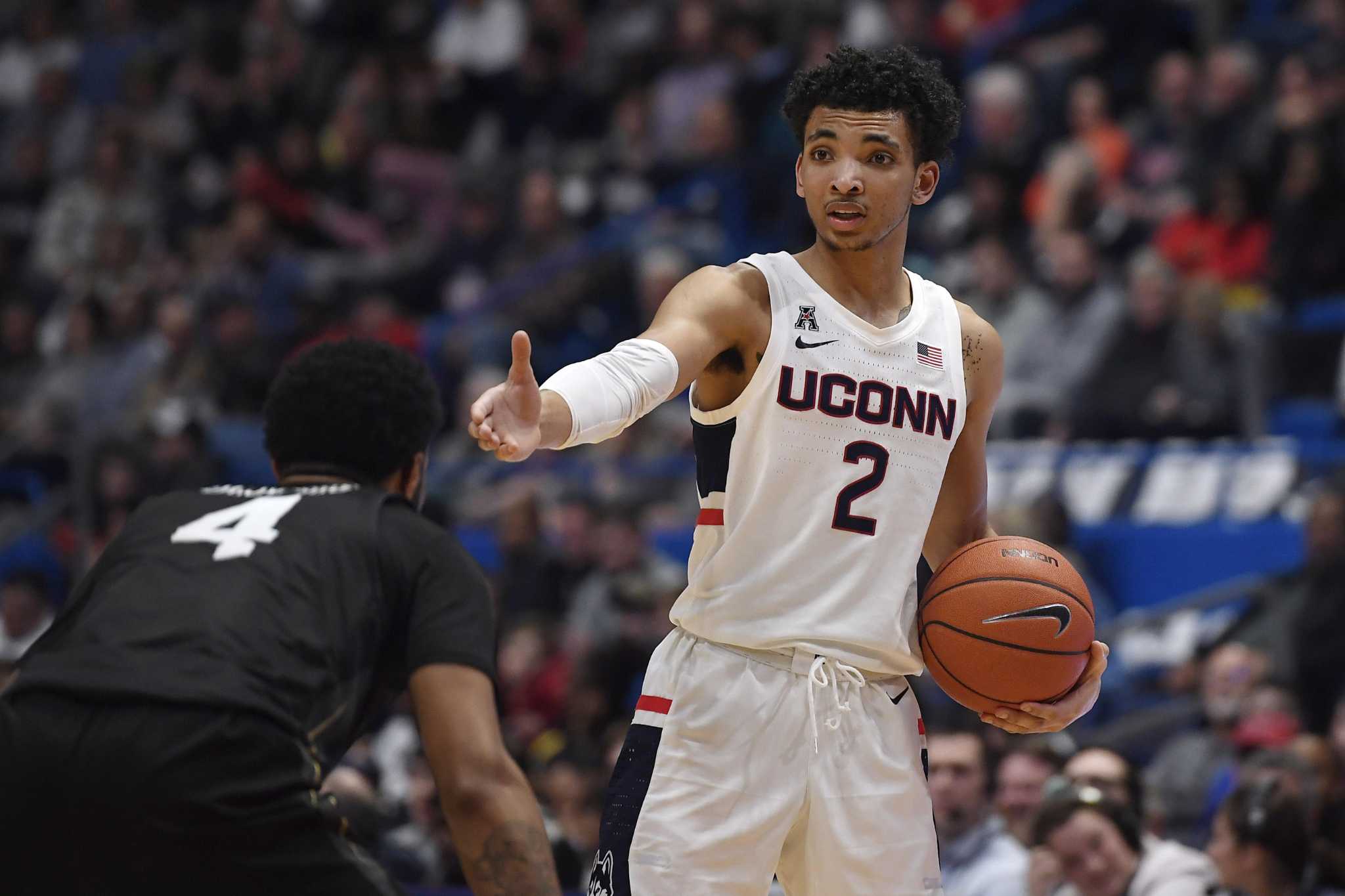
James Bouknight is about to announce his presence to the Big East

Photo by Jessica Hill | Associated Press

Projected Starters: PG Jalen Gaffney (6'3" So), SG James Bouknight (6'5" So), SF Brendan Adams (6'4" Jr), PF Tyler Polley (6'9" Sr), C Josh Carlton (6'11" Sr)

It was a tale of three seasons for the 2019-20 Huskies. Aside from a disappointing loss to St. Joe's, they had a respectable non-con with a win over Florida and close losses to Xavier and Indiana. Conference play started with a thud as Hurley's side sputtered to a 2-6 start in league play with a loss to Villanova mixed in as well. Then it was Bouknight time. The freshman guard went from flash to phenom as UConn went 8-2 down the stretch with wins over Cincinnati, Memphis, and Houston included.

The Huskies lost a great four-year player in Christian Vital, who scored 1,735 points but never played in a NCAA Tournament game, but return a solid core with Bouknight as the clear star. While he was solid all year, he turned it on down the stretch. During that 10-game run, Bouknight had a PORPAGATU! score of 5.4, which would be the second best of all returning Big East players behind preseason Big East Player of the Year Marcus Zegarowski. He is a legitimate BEPOY contender and dark horse All-American candidate. He is joined in the backcourt by Gaffney, who they hope proves a more steady player than the departed Alterique Gilbert. Adams was mostly a role-player, but both Polley and Carlton bring experience to the front court. Off the bench, two-time MEAC scoring champ RJ Cole averaged 21.4 ppg for Howard University and Hurley has a trio of exciting freshmen in wing Andre Jackson, physical big Adama Sanogo, and the incredibly long Javonte Brown-Ferguson. One of those young bigs could be needed early if Polley and Akok Akok aren't ready to go; bother suffered injuries last year and could continue to miss time.

Hurley likes to run an offense with multiple point guards that can start the attack, so expect to see a lot of mixing of the guards. Due to multiple competent ball-handlers, his teams don't turn the ball over often and the length and strength up front allows them to crash the offensive glass. More than anything, expect Bouknight to be the man. During that 10-game stretch he averaged 17.8 ppg/5.7 rpg with a 121.6 offensive rating while shooting 39.0% from three. He is drawing NBA attention and will be the engine that makes UConn's offense go. Expect them to drive often and work to get to the line. At the defensive end, Hurley's teams excel at swarming teams off the three-point line. In 9 of his 10 seasons as a head coach, his teams have been in the top-35 nationally at limiting three point attempts. They want teams to drive because they have a glut of shot-blockers inside. Similarly, in 9 of 10 seasons his teams have been top-100 in percentage of shots blocked. They chase you off the line, and when you drive, they swat your shots away. His teams also aggressively pursue turnovers, but the aggression that leads to shot blocks and turnovers has two negative effects: teams are able to punish them on the offensive glass and also get to the line frequently. These trends have been fairly consistent going back to his earliest days coaching at Wagner. The key to beating his teams is to be patient, keep looking for good shots, and taking advantage of their overaggressive tendencies.

It's hard to know what to expect from this UConn team. Bouknight looks like a legitimate star, but performing nightly against Big East teams is different than the American. The recruiting and talent level is improving, but this is still a team that needed a late surge to finish 5th in the American, so projecting them as a Big East contender seems like a stretch. Because I expect a lot of parity in the league this year, anything from 2nd to 6th feels realistic. If it all goes well, this team could be fighting for the 2-seed behind an All-American in Bouknight. If it doesn't, they could be in the middle of the pack unsure of which side of the bubble they'll end up on. The truth is probably something in the middle, with a return to the NCAAs a fair expectation, but a seed that will likely see them packing their bags for Storrs before the first weekend is over.

Marquette Memory: As we welcome UConn back to the Big East, can it be anything other than the night UConn welcomed Marquette to the Big East? Jim Calhoun brought his undefeated #2 ranked Huskies to the Bradley Center to take on Steve Novak and the freshmen Three Amigos (Jerel McNeal, Dominic James, Wesley Matthews). The first half was a back and forth affair as Novak and Rashard Anderson traded shots. Marquette took a 39-33 lead into the half, then it was unquestionably Novak time. In the second half alone, Novak went 2/2 from two, 3/7 beyond the arc, and a flawless 11/11 at the line. He poured in 24 second half points and finished with 41 points and 16 rebounds. The 94-79 final score actually flattered the Huskies, who needed an 8-1 run in the final 81 seconds to get it that close. Without a doubt, Marquette emphatically announced their arrival in the Big East on January 3, 2006 with a resounding win over one of the best teams in the country.

Tuesday, November 17, 2020

Villanova Preview, 2020-21

Villanova Wildcats


Head Coach: Jay Wright (593-267, 471-182 at Villanova)

3-Year NCAA Rank Average: 13.7

3-Year kenpom Average: 16.3

2020-21 T-Rank Projection: 10


 Collin Gillespie, Justin Moore, & Jeremiah Robinson-Earl all earned Preseason Big East Honors

Photo by Mitchell Leff | Getty Images

Projected Starters: PG Collin Gillespie (6'3" Sr), SG Justin Moore (6'4" So), SF Jermaine Samuels (6'7" Sr), PF Cole Swider (6'9" Jr), C Jeremiah Robinson-Earl (6'9" So)

Early on there were some questions as to how good Villanova was after losing their only two true early tests against Ohio State and Baylor. Taking out #1 ranked Kansas at home started to answer those questions. They started Big East play in excellent fashion, getting to 7-1 with the only loss at Marquette before a 3-game losing skid seemed to take them out of the conference title race. Instead, they rebounded to win 7 of their final 8 games and share the league crown at 13-5. The Wildcats were looking at a likely 2-seed in the NCAA Tournament before the season was cut short.

Star forward Saddiq Bey is gone for the NBA Draft, but everyone else from that team is back, including four double-digit scorers in Gillespie, Moore, Samuels, and Robinson-Earl. They are heavy favorites not only to win the league but to compete for the National Title as they register in the top-5 of the AP Poll, kenpom rankings, and just about every major publication. Swider joins the starting lineup and Wright will hope he can find shooting consistency. He came in highly regarded but has never made good on his top-50 recruiting ranking. If he can't handle the spotlight, there are a number of candidates to take his spot. Tulane transfer Caleb Daniels averaged 16.9 ppg for the Green Wave and was considered a future NBA player by staff there. Bryan Antoine was a top-15 recruit and McDonald's All-American that never got on track as a freshman due to injuries, and recent reports indicate he may miss more time this year, so whether he'll get a chance to make an impact remains to be seen. Dhamir Cosby-Roundtree has experience, is able to play either frontcourt position, and is an efficiency monster.

Offensively, this should be another typically beautiful Villanova attack. All five starters can step out beyond the arc, they share the ball brilliantly, and have had a top-25 adjusted offensive efficiency 7 years running. Gillespie will lead the way and has shown the ability to take his time probing the defense until he can create for himself, another player, or initiate the quick hockey passes that ultimately lead to a basket. As a team, everyone can shoot, they collectively score at all three levels, and they won't beat themselves because they limit turnovers and convert the easy points at the line. Defensively, they work hard to limit three point attempts, swallow up anything on the glass, and defend without fouling. With length at every position and off the bench, this should be a solid defense that is good enough to compete for a title, especially buoyed by what should be an excellent offense.

When it comes to the Big East this season, there is Villanova, then there is a gap, then there is everyone else. While Creighton might have a comparable offense, they don't have nearly the wealth of proven options and shooters and their defense can't hold a candle to 'Nova. This is not only the clear and obvious best team in the Big East but maybe the best team in the nation as well. With the Big East expanding the schedule to 20 games, I feel the only thing that might keep 'Nova from tying or breaking the league record for wins (Syracuse won 17 league games in 2012) is the high likelihood that there will be COVID cancellations. Otherwise, I think 17, 18, 19, or even 20 wins could be possible for this crew. That's how much better they are than the rest of the league.

Marquette Memory: Villanova was a familiar foe for Marquette fans before joining the Big East, and most of the memories were bad ones. Marquette was just 2-5 all-time against Villanova when Dwyane Wade's junior season started with the Coaches vs Cancer Classic at Madison Square Garden. Jay Wright's team wasn't as accurate from the line then, staggeringly missing their first 20 attempts from three before finishing 3/26. Where 'Nova did excel was on the offensive glass, pounding Marquette inside with 31 offensive rebounds, but as often as they grabbed those boards they seemed to miss the putback attempts, including five consecutive misses on the same possession at one point. Wade scored 17 points as Marquette came away with the 73-61 victory. Coach Tom Crean said "The great news is we got a win, the great news for me as a coach is I have a lot of things to work on." Clearly, that work paid off as Marquette went on to win the Conference-USA regular season title before advancing to the program's third Final Four. 

Monday, November 16, 2020

Xavier Preview, 2020-21

 Xavier Musketeers


Head Coach: Travis Steele (38-29)

3-Year NCAA Rank Average: 39.0

3-Year kenpom Average: 41.7

T-Rank 2020-21 Projection: 53

Paul Scruggs leads a transitioning Xavier team

Photo from The Athletic

Projected Starters: PG Paul Scruggs (6'4" Sr), SG KyKy Tandy (6'2" So), SF Nate Johnson (6'4" RS Sr), PF Jason Carter (6'8" RS Sr), C Zach Freemantle (6'9" So)

Xavier never seemed to really get settled into their 2019-20 season. An impressive non-con record (11-2) was dragged down by a loss to a bad Wake Forest team. They started Big East play disastrously, but were able to rebound from their 2-6 start to level their conference record at 8-8 before dropping their last three contests, including a loss to DePaul in the Big East Tournament (one of only two completed games). Departing from that team were star scorer Naji Marshall, seventh year senior Tyrique Jones (at least it felt that way), and starting point guard Quentin Goodin, leaving the Musketeers in flux.

On paper, there seems to be experience on this team, but much of it was accrued at other programs. While they have three senior starters, only Scruggs has been at Xavier the entire time. Johnson was an efficient scorer for Gardner-Webb, but did so against primarily Big South competition. Carter was a solid but unspectacular quality role-player in the front court. Tandy and Freemantle will be hoping to take big steps forward as their minutes go up. If anyone in the back court fails, freshman Dwon Odom will likely be the first option to seize minutes. He's regarded as the point guard of the future and will be expected to contribute immediately. A trio of transfers may also be worth watching. Bryan Griffin is a physical big who up-transferred from Division II. Adam Kunkel (Belmont) and Ben Stanley (Hampton) were both productive scorers, albeit at lower levels, but have yet to receive waivers to play this season. If they aren't available, expect Steele to dig deeper into his top-25 recruiting class as both CJ Wilcher and Colby Jones are wings that could be called on early if the depth isn't adequate.

***Update: Stanley's waiver was denied and he will have to sit out this season.***

Calling Xavier's offenses under Steele mediocre might be generous. His teams have been terrible shooting both from deep and at the line. Whereas Chris Mack was able to adjust his tempos to fit his team and seemed to constantly have top-30 offenses, Steele's teams haven't matched that. Part of that was because of Naji Marshall, who was their highest usage player each of the past two years despite being consistently inefficient. In the past, Scruggs has shown tendencies to defer to other players, so my guess for the guy the offense will run through is Tandy, who improved his efficiency in conference play and flashed the ability to take over games. Steele looks to score inside first, though that could be because of their inept shooting the past two years. If Johnson and Kunkel can't shore up the outside shooting, look for Griffin to be cast in the Tyrique Jones role. He led Division 2 in rebounding last year and should be a stronger interior presence than the other Xavier big men. Defense was Xavier's calling card last year largely because they challenged everything well. They have shotblocking inside and they will look for Griffin to take over Jones' rebounding to limit second attempts.

Since the mid-1980s, Xavier has been defined by a string of quality coaches. From Pete Gillen to Skip Prosser to Thad Matta to Sean Miller to Chris Mack, Musky fans have become accustomed to having quality young coaches that elevated their program before leaving for bigger destinations. It's still early, but I'm not convinced Steele will continue that trend. This looks like a third consecutive year where Xavier fails to inspire. Unless Scruggs, Tandy, or Freemantle can make a star turn, there simply isn't enough here. The rest of the roster is cobbled together from the mid and low major ranks mixed with freshmen. They will need a couple players to really hit big if they want to be in the mix for a NCAA berth. They will likely scrap their way to some victories, but look to have more a NIT than NCAA profile.

Marquette Memory: The first time Marquette faced Xavier was a banner occasion for new head coach Ed Hickey. It was December 22, 1958 when the 8th-ranked Musketeers took on Marquette at the Milwaukee Arena. Xavier was undefeated and coming off a NIT Championship the previous season, but it was Marquette's fast break that won the night. Mike Moran led the way with 26 points and 14 rebounds. Hickey praised his performance, saying "When the biggest guy on the team winds up in the front of the fast break time and again, makes the longest trip back on defense and then is out in front again going down, there's only one word for it and that's hustle." Hickey led Marquette to the NCAA Tournament and a Sweet 16 appearance that year, and added another victory over Xavier along the way, defeating them in Cincinnati on February 21, 1959.

Sunday, November 15, 2020

Seton Hall Preview, 2020-21

Seton Hall Pirates


Head Coach: Kevin Willard (236-183 overall, 191-134 at Seton Hall)

3-Year NCAA Rank Average: 34.3

3-Year kenpom Average: 35.3

2020-21 T-Rank Projection: 53

Sandro Mamukelashvili looks to emerge as the next Pirate star

Photo by Jeff Roberson | AP Sports

Projected Starters: PG Bryce Aiken (6'0" RS Sr), SG Myles Cale (6'6" Sr), SF Jared Rhoden (6'6" Jr), PF Sandro Mamukelashvili (6'11" Sr), C Ike Obiagu (7'2" RS Jr)

Seton Hall's start to the season was rough. Despite being a projected top-20 team, they sputtered to a 6-4 start and didn't look like Big East contenders. But then they ran off 10 straight wins, including an 8-0 start to league play, and played like a top-10 team during that stretch. On February 8th, with a 10-1 league record and 3-game lead in the standings, they were the giants of the Big East. A sputtering finish, however, saw they drop 4 of their last 7 as they shared the league title with Villanova and Creighton.

Gone from that team is their surprisingly efficient point guard Quincy McKnight, their defensive eraser Romaro Gill, and inefficient gunner Myles Powell. So who takes the reins? Harvard grad transfer Bryce Aiken is getting a lot of attention, but despite averaging 16.8 ppg for the Crimson over four seasons, he hasn't been fully healthy since 2017. The talent is evident on the court, but the jury is out on how much Aiken will be available. Cale and Rhoden have both flashed talent on the wing, but need to show they can be consistent contributors. Mamukelashvili is the most proven star of the team after averaging 11.9 ppg/6.0 rpg last season, but really turned it on down the stretch, going for 15.1/7.8 over the last 8 games of the season when Powell was struggling to find consistency. Up front, Obiagu brings similar shot blocking as Gill did, but needs to improve his offensive efficiency. Off the bench, guard Shavar Reynolds, transfer wing Takal Molson, and big man Tyrese Samuel provide experienced depth at every position.

To the casual eye, Seton Hall's offense the past two years has basically been "give the ball to Powell and let him go to work." While that was sometimes the case, when they were at their best, Seton Hall was spreading the ball between a number of different shooters and letting Mamu and Gill clean up the offensive glass. I expect them to spread the load more this year and continue to hit the offensive glass. It will depend on Aiken and Molson, both of whom have shown the tendency to mimic the inefficient gunner role Powell played. If Willard can rein them in, they could have a balanced, efficient offense. Defense is where the Pirates should be more consistent. Seton Hall has been tournament-caliber each of the past 5 seasons and averaged a top-40 defense in that time. Their length at almost every position and experience should allow that to continue. They will aggressively force teams into bad shots by denying three-point attempts and smothering teams at the rim. They may take a slight step back without human eraser Gill and lock-down perimeter defender McKnight, but they have the roster pieces to replace even those guys, so by the time the season is in full swing, expect more of the same from the Hall.

This is a really tough team to peg, and I feel their success will be almost entirely based on what the offense does. The pieces are there for the defense to be on par with Willard's routinely solid defenses, but whether Mamu is allowed to be the man or if one of the transfers tries to channel their inner Myles Powell will determine how far this team can go. If it all comes together, they could find themselves as high as second in the Big East. If not, don't be surprised for the Hall to be sweating on the bubble come March.

Marquette Memory: While everyone remembers Marquette's first Big East home game, a 94-79 drubbing of then-#2 UConn, their first Big East road game was a tighter affair but with a similar end result and star. Seton Hall raced out to a 7-1 lead, their largest of the game. Marquette came back to tie it and eventually took an 8-point lead of their own, however the game was within a single basket for 34 minutes and 4 seconds. More than 85% of the game was played within 3 points. Ultimately, it was Steve Novak, who led Marquette with 25 points and 9 rebounds, that gave Marquette the lead for good on a three with 4:07 to play. It was the first of 8 straight wins, and 13 of 14 against the Hall that spanned the Tom Crean and Buzz Williams eras.

Saturday, November 14, 2020

Creighton Preview, 2020-2021

Creighton Blue Jays


Coach: Greg McDermott (511-311, 231-116 at Creighton)

Three-Year NCAA Rank Average: 36.0

Three-Year kenpom Average: 32.3

 2020-21 T-Rank Projection: 13

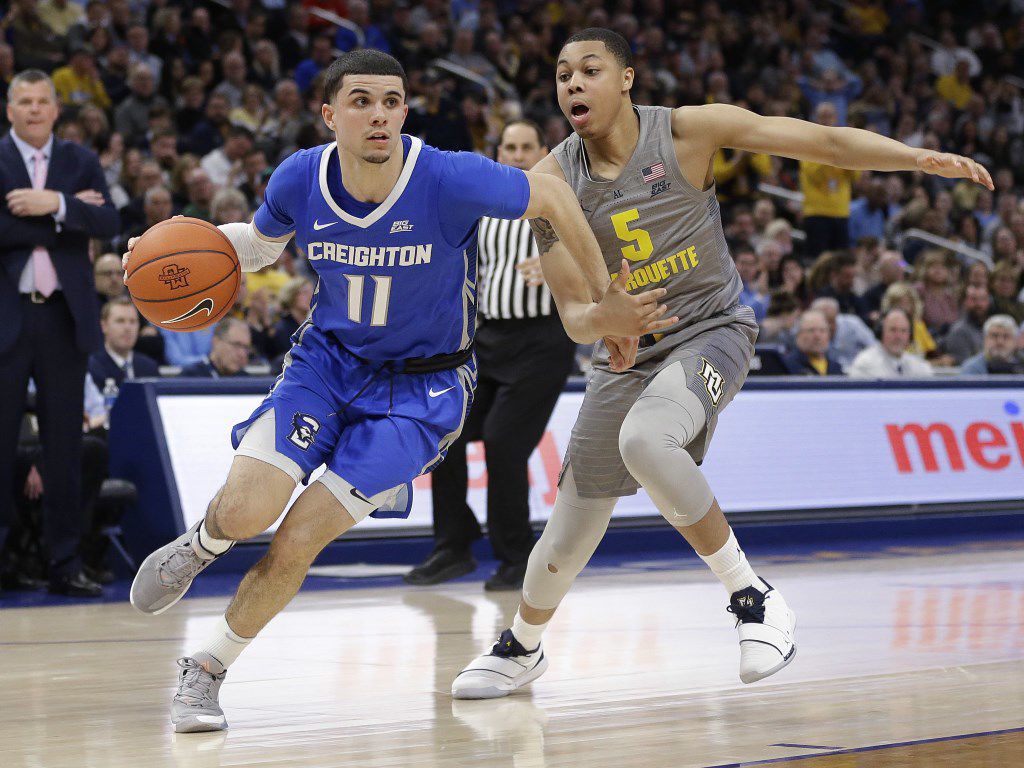
Marcus Zegarowski is the Preseason Big East Player of the Year

Photo from Omaha World Herald

Projected Starters: PG Marcus Zegarowski (6'2" Jr), SG Antwann Jones (6'6" RS So), SF Mitch Ballock (6'5" Sr), PF Damien Jefferson (6'5" RS Sr), C Christian Bishop (6'7" Jr)

Creighton fans more than maybe any other in the Big East must have been emotionally gutted when the 2020 NCAA Tournament was cancelled. As a team, they had the #3 offense in adjusted efficiency in the country, Ty-Shon Alexander and Marcus Zegarowski were a scintillating backcourt combo, and Alexander's ability to lock down stud scorers papered over the team's defensive deficiencies. Early season losses to Michigan and San Diego State were a lot more understandable on the resume by March while their 11-2 finish to Big East play earned them a share of the league title and had them one of the hottest teams in the country heading into the sport's vanishing premier event.

On the heels of that success, Ty-Shon Alexander declared for the NBA. We'll dig in to the significance of that more later. Alexander's departure means Marcus Zegarowski will be the star of the show. The Preseason Big East Player of the Year is an excellent offensive player, able to create for himself and others, and will lead what will almost certainly be a top-10 offense. Our guess at his running mate is Antwann Jones, a former top-100 recruit who sat out last year after transferring from Memphis. Jones provides length and talent but has yet to prove it at this level. If he's not able, sixth man Denzel Mahoney will be next in line, though he's a high-usage feast or famine player that will sometimes wreak havoc on opposing defenses but whose shot choices can also wreak havoc on Creighton's own offense (think a poor man's Myles Powell). Mitch Ballock is far more consistent as the league's most accurate returning three-point shooter. Up front, Jefferson and Bishop are both effective interior scorers despite being undersized. They do have injury-prone junior Jacob Epperson and freshman Ryan Kalkbrenner to provide size, but whether either can crack into the regular rotation remains to be seen. Highly rated European freshman Rati Andronikashvili was thought to be a possible immediate contributor, but is out for the season with an injury.

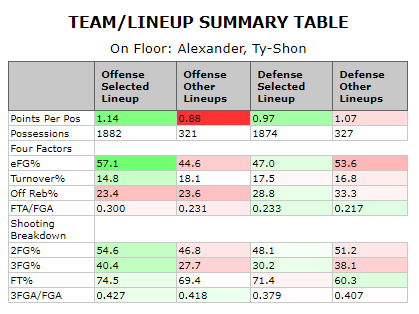
This season's Jays should be a joy to watch again on offense. Creighton is an excellent example of pace and space as they put a ton of effective shooters on the arc while also having a great ability to score in transition. While their adjusted tempo was only 178th in the country, their average offensive possession length of 16.5 seconds was 69th, so they definitely push the pace on that end and were 4th in transition offense last year. They are an unselfish team that loves to move the ball, has a variety of scorers that can step up on any given night, and will likely put up a ton of points. However, as good as they will likely be on offense, they project to be bad on defense. Creighton is bafflingly projected as a top-50 defense by T-Rank and kenpom, and I just don't see it. McDermott has had a top-50 defense just three times in his nineteen seasons as a D1 head coach. The only times he had that at Creighton were when he had legit 7-footers in the middle, a board-cleaning PF in Cole Huff, and a lockdown wing defender. He has none of that this year. Last year's defense ranked 78th in the nation and they lost Alexander, the only player that seemed to put any effort in on the defensive end. In their sweeps of Marquette and Seton Hall, Alexander took the defensive tasks of Markus Howard and Myles Powell. He held them to 14.5 ppg and below 25% collectively on threes. While I don't think Creighton's offense will necessarily crater without Alexander, their defense and ability to slow opposing stars will almost certainly take a big hit. Consider the on/off splits for Alexander last year:

I feel like the near universal top-15 projections for the Jays are overoptimistic. To this Marquette fan, the impact of losing Alexander feels like a similar impact to what Marquette went through when they lost Vander Blue ahead of the 2013-14 season, and the offense/defense disparity reminds me of the Andrew Rowsey teams of 2016-17 and 2017-18. I'm not saying Creighton will miss the tournament, but I think somewhere in the fringe-top-25 to bubble conversation is more likely than the top-3 seed everyone seems to be penciling them in as. In the past 5 years, there hasn't been a single team to crack the kenpom top-10 with an adjusted defensive efficiency outside the top-50. Creighton was #78 last year and will likely be worse this year on that end without Alexander, so it's hard to see them improving as a team overall when they will likely be so bad on the back end. In fact, last year's Creighton team was somewhat an aberration as the ONLY sub-60 defense to rank in the top-15 of kenpom the past 5 years, so expecting them to catch lightning in a bottle twice seems improbable at best. This will be a team that absolutely scorches the nets some nights and runs teams out of the gym, but whose defensive mishaps could allow inferior opponents to match their scoring pace and steal some games they shouldn't lose. They should be in the top-half of the league, but how they adjust to life after Alexander will determine if that is nipping at Villanova's heels or somewhere closer to the bubble. I expect the truth to be somewhere in the middle, with a 6-8 seed in their future.

Marquette Memory: Before Creighton joined the Big East, the last time they had played Marquette was on March 11, 1998 in the NIT. It was a tight affair most of the way, with Creighton holding a 36-35 lead at halftime. Creighton's shooting went cold down the stretch as they didn't hit a field goal for the final 8:28 of the game, allowing Aaron Hutchins (19 points, 7 assists) to lead Marquette to an 80-68 victory. Marquette would follow that up with an overtime win over Auburn before losing to eventual champions (later vacated) Minnesota.


Thursday, November 12, 2020

UCLA Preview, 2020-21

UCLA Bruins

December 11th, Pauley Pavilion


Coach: Mick Cronin (384-182 overall, 19-12 at UCLA)

3-Year NCAA Ranking Average: 77.3

3-Year kenpom Average: 78.7

Projected 2020-21 T-Rank: 34


Tyger Campbell & Mick Cronin are brewin' up a UCLA resurgence

Photo from Los Angeles Daily News

Projected Starters: PG Tyger Campbell (5'11" RS So), SG David Singleton (6'4" Jr), SF Jaime Jaquez, Jr (6'6" So), PF Chris Smith (6'9" Sr), C Jalen Hill (6'10" RS Jr)

There were a lot of skeptics when Mick Cronin brought his bruising, slow-down style to Westwood. When the Bruins got off to a 12-11 start with losses to Hofstra and Cal State Fullerton on the ledger, it was even worse than people expected. The Bruins finished the season 7-1 and were playing like a top-20 team as they almost captured a share of the Pac-12 title. To Cronin's credit, the Bruins were at their best when they adhered to his style, going 7-8 when games had 66+ possessions but 12-4 in games with 65 or fewer possessions. Not only that, but all 4 of those losses came to teams that were either in the final Cracked Sidewalks projected NCAA field or, in the case of Stanford, just outside (first four out). Whether that late surge would've earned UCLA a tourney bid or not, they definitely improved as the season went on and as they adjusted to Cronin's style.

After losing top-20 freshmen Daishen Nix to the G-League, UCLA got a big boost when star forward Chris Smith pulled his name out of the NBA Draft. For the most part, UCLA goes forward with a roster very similar to last year. All five starters return and they also add former 5-star shooter Johnny Juzang, who is transferring from Kentucky, and 4-star freshman guard Jaylen Clark. Tyger Campbell is a talented distributor who is best served when he doesn't shoot the ball. They have a deep rotation of wings, including Singleton, Jaquez, Juzang, Jake Kyman, and Jules Bernard, all of whom are 6'4-6'7" and able to provide depth and defensive pressure. Up front, Smith, Hill, and Cody Riley excel as physical presences inside drawing fouls and cleaning the offensive glass while providing length and rim protection on defense.

It didn't show early on, but the end-of-the-year Bruins were what Cronin wanted his team to be. Offensively, they were grinding the shot clock, making threes, getting their misses, and putting back second-chance points. Defensively, they suffocated teams inside without fouling while their deep roster and physical length allowed them to be aggressive. Cronin's Cincinnati teams were similar to this. Slow-down pace, physical defense, and good enough offense to grind out wins. What makes this UCLA squad different is the level of talent. It's possible the late run last year was an aberration, but if the athleticism is going to truly mesh this well with Cronin's efficient system, their ceiling is high.

So what can we expect from UCLA in 2020-21? I definitely don't think they're as bad as their 12-11 start, but I'm not convinced by their top-20, 7-1 finish either. The Pac-12 last year wasn't particularly good and the most impressive of those 7 wins were sweeping Arizona (never as good as their efficiency metrics indicated) and Colorado (fell off after their stellar non-con). UCLA should be safely in the NCAA field, but look more like an "Also Receiving Votes" team than a bonafide top-20 squad. Early on in the season, however, I think they will be a stout test for Marquette. This is a team that has played together and is hungry after their late season surge was cut short. The key matchup to watch will be Tyger Campbell against DJ Carton. Campbell is UCLA's most important player simply because without Nix, they don't have anyone else who can play his position. During that late-season 8-game stretch, Campbell played 36+ minutes on 7 occasions, all of which were wins. The only one he didn't was when he played 34 minutes in the season finale against USC, which they lost.

Marquette Connection: What is stunning about Marquette and UCLA isn't the history they share, but rather the history they don't share. The programs have only met twice, both times in Milwaukee with UCLA claiming victory in both 1949 and 1964. In the 1970s, UCLA went 273-27 and their 0.910 winning percentage was the best decade in NCAA history. Barely behind them was Marquette at 252-40. While their 0.863 winning percentage was second to the Bruins, it still stands as the third best decade winning percentage in NCAA history with only 1950s Kentucky between the two. Yet somehow, despite two of the top three decade-long programs in NCAA history playing at the same time, they never met during that stretch. They came within a game of meeting twice. Both teams made the 1974 Final Four but UCLA lost to NC State, robbing them of a chance to meet Marquette in the title game. In 1976, Marquette came up one game short of the Final Four, losing to undefeated Indiana, who beat UCLA in their next game en route to the title.

Tuesday, November 10, 2020

UW-Green Bay Preview, 2020-21

UW-Green Bay Phoenix

December 8th, Fiserv Forum


Coach: Will Ryan (0-0)

3-Year NCAA Ranking Average: 248.3

3-Year kenpom Average: 223.7

Projected T-Rank: 279

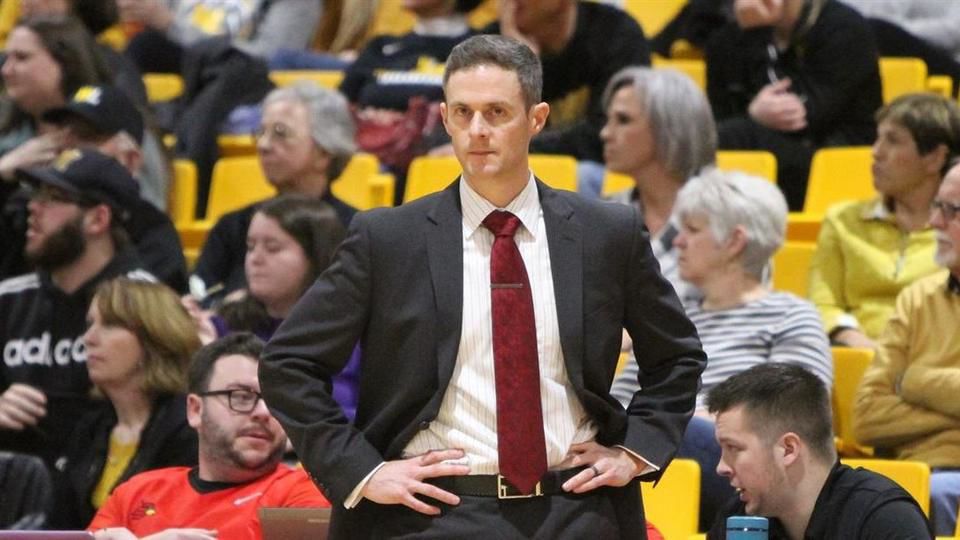
Will Ryan takes over as the new Phoenix head coach

Photo from Wheeling University

Projected Starters: PG PJ Pipes (6'2" Sr), SG Josh Jefferson (6'2" RS Sr), SF Amari Hardy (6'3" So), PF Paris Taylor (6'6" Jr), C Terrance Thompson (6'8" Fr)

It surprised most when Green Bay head coach Linc Darner was fired after his fourth winning season in five with the Phoenix. With his departure, expect the blistering fast pace (top-10 in offensive possession length all 5 seasons) to go away and the anemic defense (319th in efficiency) to improve. Darner's departure may be down to his weak starts as Green Bay entered the New Year .500 or worse each of the past three seasons and despite his Horizon success (51-39 conference record, 1 tournament title) there just wasn't much interested in the program.

Enter Will Ryan, son of long-time UW-Madison head coach Bo. The Phoenix have a solid backcourt trio. PJ Pipes was the most efficient Green Bay player last year while Hardy is the leading returning scorer at 15.9 ppg last year. Transfer Jefferson was a solid shooter in his time at Illinois State and should slot right into the starting lineup. Up front is where they have questions. Taylor is a JUCO transfer that was a solid rebounder but hasn't done anything at the D1 level yet. They have a trio of 6'8" freshmen with Thompson looking like the most physical option in the middle. This team has 9 freshmen so quite a few of their rotation members will be new to D1 and thrown into the deep end early.

The initial thought with a Ryan coaching at Green Bay is that the Phoenix will basically turn into UW-Madison East, but that may not be the case. The younger Ryan spent the majority of his time as an assistant on staff with Saul Phillips, who is no stranger to a faster pace of play than Ryan's father. That held true in Ryan's one season as a Division II head coach, where his Wheeling team played at a middle-of-the-road pace. While the pace won't be Darner's, the Phoenix will likely still make their living slashing to the rim, particularly Amari Davis, who took 98% of his shots inside the arc. Pipes and Jefferson can both score inside and out so they will provide balance to Davis' downhill attack. Don't expect much from the Phoenix interior game as it's a mix of freshmen and transfers that have no D1 experience. Defensively, the Phoenix will look familiar. They will be in strict man-to-man, rarely helping, rarely trying to force turnovers, and rarely gambling. Considering how young their interior players are, that is an area teams could look to exploit as the Phoenix adapt to this defensive change.

College basketball is a guard's game, and because of the strength of the Phoenix backcourt, they will likely steal a few games they aren't expected to win. I doubt that will happen much early in the season, however, as a team with a new coach, a completely different style, and an overabundance of inexperience will take some time to find its footing. In time, Ryan could prove himself an able head coach, as did the last scion of a UW-Madison Final Four coach to ply their trade at the Division I level, but it will take time to get there. For this season, at least, UW-Green Bay should provide easy pickings for a team with Marquette's talent level.

Marquette Connection: The last time Marquette played UW-Green Bay was a road game in 2011. Buzz Williams took his team on a trip up to the Resch Center on a snowy December night and was handed a 49-47 loss at the hands of Marquette alum Brian Wardle. The game prompted chaos amongst Marquette fans as many wondered if the team would even qualify for the NCAA Tournament. Marquette responded well to the loss, winning their next six games en route to a 26-9 record, a share of the Big East title, and an appearance in the Elite 8, proving that there's only so much you can read into any December result, even a bad loss to a 3-7 team.


Sunday, November 08, 2020

UW-Madison Preview, 2020-21

UW-Madison Badgers

December 4th, Fiserv Forum


Coach: Greg Gard (101-57)

3-Year NCAA Rank Average: 51.0

3-Year kenpom Average: 36.0

2020-21 T-Rank Projection: 8

Nathan Reuvers & Micah Potter power the Badgers front line
Photo by Trevor Ruszkowski - USA Today Sports

Projected Starters: PG D'Mitrik Trice (6'0" RS Sr), SG Brad Davison (6'4" Sr), SF Aleem Ford (6'8" Sr), PF Micah Potter (6'10" Sr), C Nathan Reuvers (6'11" Sr)

If Marshall Mathers were asked to analyze the 2019-20 UW-Madison team, he'd likely ask will the real Bucky Badger please stand up? While they finished the season #19 in T-Rank and #22 on kenpom.com, they took a bizarre track to getting there. The first version of the team was pre-Potter. Before the Ohio State big man transfer took the floor, the Badgers went 5-5 and were ranked just #55 on T-Rank. The thought was that their roster was complete once he took the court, and in their next 10 games they went 7-3 and were #27 in T-Rank during that stretch. Then starter Kobe King left the team. Many believed the Badgers would fall off significantly, but instead they took off, going 9-2 the rest of the year and ranking #6 in T-Rank through the end of the season, while also capturing a share of the Big 10 title. The only player they lose that played a significant role down the stretch is Brevin Pritzl, and with the NCAA's new ruling, this could potentially be the start of a two-year run with everyone on the 2020-21 roster intact.

Last year's UW-Madison team seemed to be deep but lacking star power. While no one emerged the way Ethan Happ, Frank Kaminsky, or Sam Dekker did for past teams, every starter has shown the ability to put up numbers on any given night. Every one of them can score both inside and beyond the arc. While Reuvers and Potter will likely get the largest share of touches, both of the guards had 30+ point games last year and all of them averaged over 8.0 ppg. Off the bench, they have reliable place-holders in Tyler Wahl and Trevor Anderson along with a pair of promising freshmen in Ben Carlson and Johnny Davis. They likely won't have anyone on All-America teams, but they have a roster that is as experienced as it is deep.

When it comes to style of play, it feels like this could be a copy/paste paragraph from any of the past 25 or so years. Slow, methodical offense that grinds down the shot clock under 10 on most possessions coupled with rigid, man-to-man defense that focuses on limiting three-point attempts. Last year, we expected the Badgers' three-point offense to increase due to the departure of Ethan Happ and we were correct as they went from 281st in the country in 3-point attempts/field goal attempt all the way up to 44th. With Potter available for the full season, expect this to be a team that runs down the clock and finds open shooters on the perimeter regularly.

People usually expect experienced teams to take big jumps once their players are seniors, but more often than not when teams return the same roster, they end up with pretty much the same results. For the Badgers, the (admittedly small) sample size of this roster was top-10 in the country and Big 10 champs. This projects to be the best team Marquette sees in the non-conference and might be the best team in the country that no one seems to be talking about. I expect that's because they don't have the star power of other teams in the top-10, but I feel they are clearly the best on-paper team in the Big 10 and a legitimate conference and National Championship contender. As much as I like to be optimistic, this is a seasoned team that is used to playing together and, especially early in the season, it's hard for me to see a path to victory for a Marquette team that will be looking to replace over 54% of their minutes and 67% of their scoring from last season.

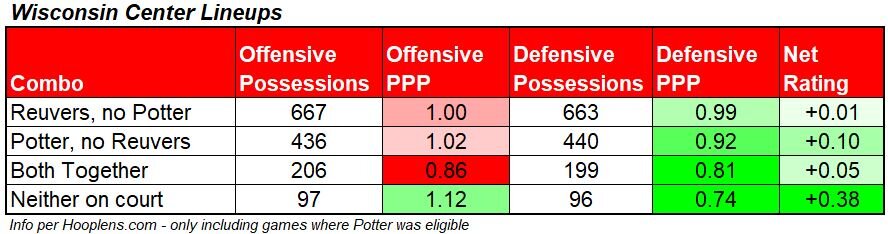
There is one reason for concern for UW-Madison fans that I want to address before closing this. While Reuvers and Potter are arguably their two best and most important players, the Badgers weren't particularly good offensively when they were playing together. As interesting as the number of neither on court is, I expect those numbers were largely garbage time and not to be given much weight. As a team, while they were better defensively with both, they were terrible offensively when both bigs were on the court. In an era when bigs are becoming less fashionable, UW-Madison's two-big plan may not be as effective as it would have been in years past. I'm still a believer in this team, but these numbers indicate it may not be a smooth path to the top-10.

Marquette Connection: Before Markus Howard made scoring 45+ points a casual thing (Howard holds positions 1-5 on Marquette's single game scoring record chart), the record for scoring in a single game was shared by Mike Moran and more recently Tony Smith, who scored 44 points at UW-Madison on February 19, 1990. While Smith was nearly unstoppable, nothing else went right for Marquette in that game as they were throttled 82-65 by the Badgers. To further exacerbate the 17-point loss, Marquette was saddled with 5 technical fouls and Head Coach Kevin O'Neill was ejected in the final moments of the game.

Friday, November 06, 2020

Oklahoma State Preview, 2020-21

Oklahoma State Cowboys

December 1st, Fiserv Forum


Coach: Mike Boynton (51-49)

3-Year NCAA Rank Average: 77.0

3-Year kenpom Average: 65.0

2020-21 T-Rank Projection: 50


2020's Top Recruit Cade Cunningham leads the Cowboys

Photo from OkState.com

Projected Starters: PG Cade Cunningham (6'7" Fr), SG Isaac Likekele (6'4" Jr), SF Ferron Flavors, Jr (6'3" RS Sr), PF Keylan Boone (6'8" So), C Kaleb Boone (6'9" So)

Mike Boynton's third season at the helm of Oklahoma State started with promise as the Cowboys found themselves 7-0 with wins over Syracuse and Ole Miss early in the year, spurred by a stellar Isaac Likekele. He missed 4 games with illness that started a 3-11 stretch as their shooting cratered. Their 44.3 eFG% during that span ranking 341st in the country (it finished at 260th). The Cowboys never fully recovered and were likely headed to the NIT when the season ended prematurely. They then saw 3 senior starters graduate and 2 key contributors transfer.

The positive came when the top player in the 2020 recruiting class, Cade Cunningham, committed to the Cowboys. Cunningham joins a backcourt with returning starter Likekele and sharpshooter Flavors, who is transferring in from Cal Baptist. The rest of the team is unproven, with the Boone brothers and JUCO transfer Bernard Kouma rounding out the front court. Off the bench, Avery Anderson, Chris Harris, and transfer Bryce Williams give some back court experience and depth. Freshman Rondel Walker will also fight for minutes, but this is a crew that is overloaded (maybe too much so) with back court options while being relatively thin up front. This team had the look of a possible NCAA Tournament team, but the NCAA ruled them ineligible. Cunningham will gloss over a lot of imperfections, but simply by the numbers they will likely have to play a lot of 3 and 4 guard rotations that could leave them at a size disadvantage.

Offensively, expect virtually everything to run through Cunningham and Likekele, and expect it to go downhill. The Cowboys were 267th in the three-point attempts/field goal attempts and their top four players in terms of three-point makes are gone. The guards will slash to the rim and try to get extra points at the line. Defensively they switch from a 2-3 zone to man-to-man. The hope will be that with quicker players, they can execute both defenses. That hasn't been the case in the past. They were 154th in defensive efficiency last year in zone. In man, the Cowboys excel at chasing teams off the three-point line. That aggressiveness can be a negative, however, as they give up a lot of extra attempts at the charity stripe and because they are chasing teams outside are not good at limiting second-chance points due to opponent offensive rebounds.

A number of outlets are high on this team, but once you get past the two lead guards, I'm skeptical. This is a roster that lacks high-major experience almost across the board. Cade Cunningham on this team feels a lot to me like the Ben Simmons LSU or Markelle Fultz Washington teams. Having one spectacular player surrounded by role-players can lead to some outstanding individual games here or there, but rarely leads to wide-spread team success (see also: 2019-20 Marquette). I don't mean to undersell Cunningham, who just might be the best individual player in the country, the #1 pick in the 2021 NBA Draft, and will absolutely have the ability to take over games on his own, but once you get past his name there's a lot to not like on this roster. I'm not sure how much home-court advantage will mean this year, but I tend to think this is a game that Marquette, who may not have the best player in the game but may very well have the edge at every other position, should win.

Marquette Connection: After beginning the series with the Cowboys 0-4, Marquette earned their first win against Oklahoma State in the 2007 Maui Invitational. Jerel McNeal (20 points) and Dominic James (18 points) led the way for Marquette as they pounded the Okies 91-61. The 30-point win remains Marquette's largest margin of victory in Maui.

Sunday, November 01, 2020

Eastern Illinois Preview, 2020-21

Eastern Illinois Panthers

November 27, Fiserv Forum


Head Coach: Jay Spoonhour (116-143)

Three-Year NCAA Ranking Average: 270.3

Three-Year kenpom Average: 267.3

Projected 2020-21 T-Rank: 158

Josiah Wallace leads 5 senior starters for the Panthers

Photo by EIU Athletics
 

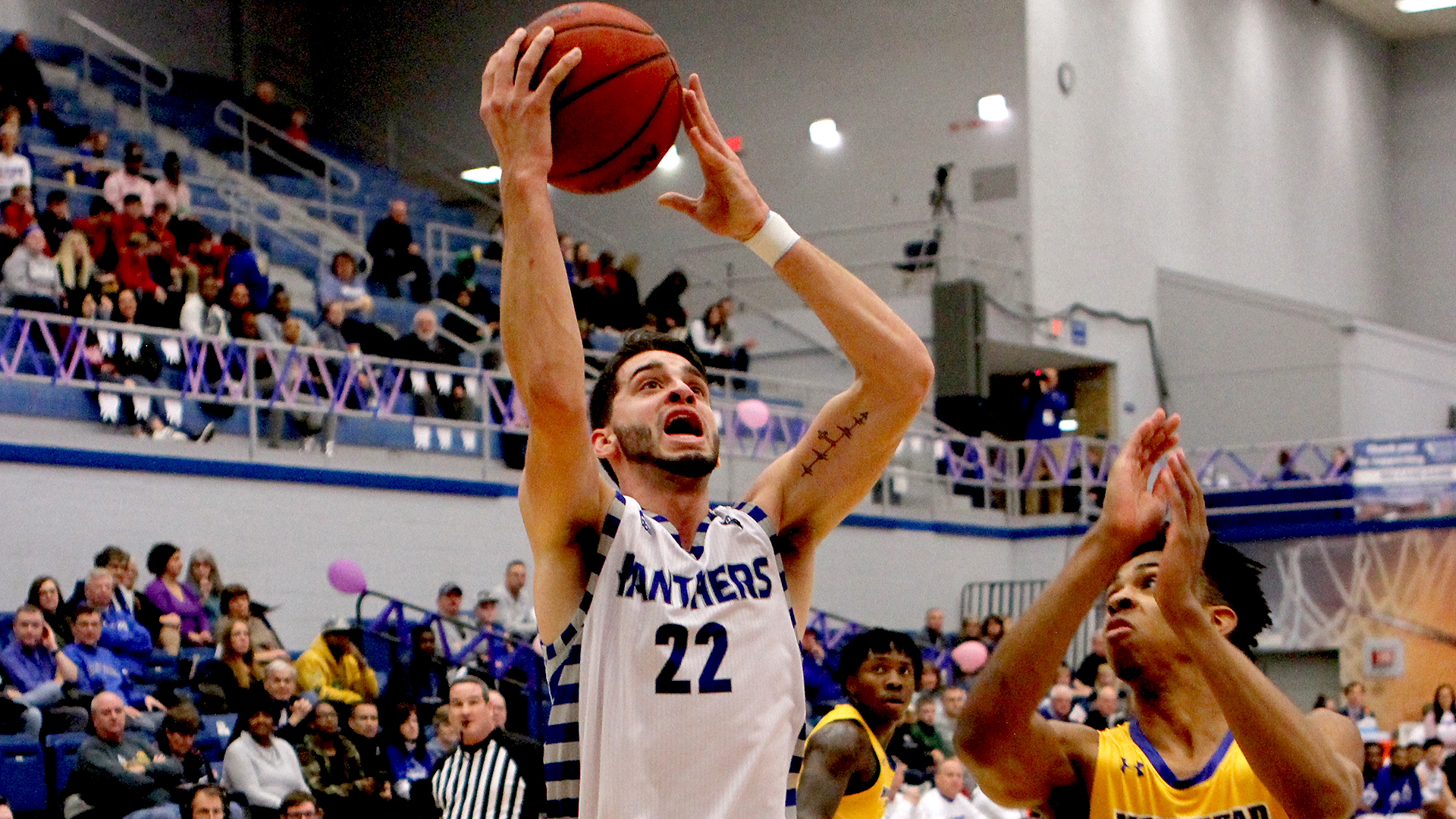
Projected Starters: PG Deang Deang (6'4" Sr), SG Mack Smith (6'2" Sr), SF Josiah Wallace (6'4" Sr), PF George Dixon (6'5" Sr), C Sammy Friday IV (6'9" RS Sr)

Last year's Panthers were the definition of streaky. After opening 0-2, they went on a 7-2 stretch to get back to respectability. They then dropped 5 straight, including the first four of conference play, before a 4-game winning streak leveled their conference record. Another down streak saw them lose 5 of 6 before rattling off 5 wins in a row before a season-ending conference tournament loss. Their most impressive stretch included wins over Murray State and Austin Peay, showing they could play with the big boys in the OVC, even if a few bad losses saw their overall conference record a mediocre 9-9.

Their top-7 scorers are all back from last year's team and, along with grad transfer Friday, form an impressive 8-man senior rotation. The Panthers also boast three JUCO transfers, led by Junior Farquhar, to add depth and experience. While projections vary, the Panthers look like a leading candidate to crack the OVC top-3 if Murray State, Belmont, or Austin Peay falter. This projects to be Spoonhour's best ever team and if the senior-laden roster can find the consistency his team flashed numerous times last year, they could be the surprise package of the OVC.

Offensively, the Panthers run a motion offense with lots of off-ball cuts and screens. Wallace will lead the way but Smith and Deang are both efficient scoring options while Dixon is a bowling ball inside that can draw contact. Friday brings a similar ability to get to the line (and similar ability to miss free throws, Dixon and Friday were 57.0% and 56.5% from the line respectively) so look for the interior players on the Panthers to go after Theo John and the Marquette bigs. Off the bench, it will be interesting to see who gets minutes. Marvin Johnson was a spot starter and earned major bench minutes early last year, but his team-leading usage coupled with his inefficiency led to a decrease in minutes as Jordan Skipper-Brown and Kashawn Charles both ate into his minutes. Defensively, the Panthers often play small, which leads to a lot of ball pressure and forced turnovers along with the ability to use their quickness to chase teams off the three-point line. They are terrible at actually contesting threes (35.8 3PFG% against) so it's somewhat impressive that they stop teams from getting opportunities. With an undersized team, you would expect them to get beat up at the rim, but Spoonhour's teams actually excel at blocking shots, so expect to see that from the help side.

The Panthers look like a team that will turn things around in 2020-21. It isn't just the wealth of experience but the way the pieces fit. Last year they didn't have a true big in the middle and struggled to find efficiency off the bench. Friday fills the big man need while St. Louis transfer Madani Diarra gives them actual sizable depth at the position. Off the bench, the incoming JUCO transfers give Spoonhour a wealth of options. Further, I look at things that are uncontrollable and many of those went against EIU last year. The Panthers were sub-300 in defensive 3PFG%, defensive FT%, and Luck, according to Pomeroy. When it comes to threes, it's usually more important to limit opportunities because statistics show opponent three-point make percentage is less controllable, and the Panthers did excel with this roster last year at limiting 3-point attempts. If that, along with opponent free throw percentage and the random bounces of luck normalize, then EIU's 5-9 record in game decided by 5 points or less could easily turn around. I expect this to be the toughest of Marquette's buy-level games because early in the season, teams that have continuity and familiarity will likely be best prepared. Don't be surprised to see the Panthers hang in for much of the game, just like they did last year when they played at UW-Madison.

Marquette Connection: The name Eastern Illinois may bring up some nightmares for Marquette fans that remember the 86-83 overtime victory from just three years ago, but none of the players we expect to see for the Panthers this season played a role in that affair. There is someone else on their roster who was part of a near-upset of Marquette, however. EIU Assistant Coach Tone Boyle played for the UW-Milwaukee team that cut a 22-point deficit to just 2 in the final minute against Marquette in 2010 at the Mecca/Cell/Pantherena. Marquette's free throw shooting sealed the 73-70 victory as Jimmy Butler, Darius Johnson-Odom, and Jae Crowder combined for 7 free throws in the final minute of the game. Expect Boyle and EIU to use those narrow losses to try to motivate their team when they come to Milwaukee this season.

Friday, October 30, 2020

Arkansas-Pine Bluff Preview, 2020-21

Arkansas-Pine Bluff Golden Lions

November 25, Fiserv Forum


Head Coach: George Ivory (136-248)

Three-Year NCAA Ranking Average: 326.0

Three-Year kenpom Average: 330.0

Projected 2020-21 T-Rank: 219

UAPB will be counting on a strong return from Shaun Doss

Photo by UAPB Athletics

Projected Starters: PG Nicholas Jones (6'1" Sr), SG Dequan Morris (6'4" Sr), SF Shaun Doss (6'5" RS Sr), PF Markedric Bell (6'7" Sr), Terrance Banyard (6'8" Sr)

While life as a SWAC coach can be difficult, there's no doubt George Ivory hit a low point last year as his Golden Lions went just 4-26. It certainly hurt that expected contributors Shaun Doss, Nicholas Jones, and Robert Boyd weren't available for all but a small handful of games. That gave a heavy load to Markedric Bell, Dequan Morris, and Terrance Banyard. Looking at the Golden Lions' roster for 2019-20 is bizarre. Twenty-two players logged minutes for UAPB. Just 4 players logged 20+ mpg (not including Doss, who only played 3 games) but another 8 averaged double-digit minutes. They were rotating bodies at an alarming rate. While Ivory does tend to carry a lot of walk-ons, last year was an overstuffed roster even by his standards, and it didn't help the results.

Doss was projected as a First Team All-SWAC player last year before he lost his season to injury. In his absence, Markedric Bell took over the offense as his 35% percent of shots taken was 14th in the country but only resulted in 10.8 ppg. That's...not good. It's also a big part of why UAPB had the lowest ranked adjusted offensive efficiency in the country according to kenpom. Banyard and Morris both played major minutes last year and should benefit from Doss taking some of the pressure off. The point will be the wildcard. Jones seems to be the likely first choice, but if he falters Jordan McNair and Cameron Posey have both played the position for Ivory in the past.

Offensively, the plan last year was basically throw the ball inside to Bell and Banyard, and if there wasn't a way to do that, the guards would drive the paint. UAPB got a whopping 58.7% of their points inside the arc (10th in the nation). The Golden Lions only had two players with 50+ 3PFGAs last year (Marquette by comparison had five) and both graduated, so expect an even more interior-heavy attack. Even the returning Doss won't likely change that much as over 76% of his FGA as a junior came inside the arc. Defensively, the Golden Lions run an extended 2-3 zone that seeks to bait teams into risky passes and turnovers. In that respect, it works as they have been top-100 in turnover percentage each of the past 8 years and top-10 in 4 of those seasons. However in that same stretch they have been sub-200 in 2PFG% defense 6 times because the overextension leads to wide open driving lanes. Though I suppose when you carry a roster of 15-20 players you can afford to overextend and pressure because you always have bodies to throw out there. Bottom line, the key to beating them is protecting the ball and working it inside.

After being one of the worst teams in the country last year, T-Rank shockingly has UAPB as a top-220 team and projected 2nd in the SWAC. As much as I'd love to believe it, I'm a skeptic. Getting Doss back is a solid addition, but I have no faith in their PG play as all of their returning candidates had higher turnover rates than assist rates. This looks like a middle-of-the-road SWAC team that won't be worth much more than a notch in the win column. That said, I will happily take a few guaranteed wins in this non-conference for Marquette, and there's no team that looks to be a more certain victory than over the Golden Lions.

Marquette Connection: Arkansas-Pine Bluff has only ever played Marquette once, a 100-49 victory for the good guys on December 19, 2001. It capped a 10-game season opening winning streak for Marquette en route to the first of two NCAA berths for the Dwyane Wade-led team. Oluoma Nnamaka's 17 points paced the way as 6 Marquette players that scored in double-figures that night.

Thursday, July 23, 2020

Let's Save the Season

 Is this the final image of 2020 NCAA Basketball? | Photo from USA Today

There is a lot of pessimism around the 2020-21 NCAA Basketball season. In April, I predicted that St. John's/Creighton would be the last NCAA Basketball of the 2020 calendar year. After seeing TBT create a safe environment that ended in the best way possible, with the Marquette alums lifting a trophy, I've reconsidered that notion.

Diener's only TBT Title Game Basket was the winner | Photo from TBT Staff

TBT showed that basketball is possible and the NCAA has to do everything they can to salvage the 2020-21 season. I feel this is possible and needs to be done in three phases: non-conference, conference, and postseason. All three are vital. Without non-conference play to serve as a barometer between leagues, tools like the NET are meaningless. Without conference play, we don't have the foundation for the postseason tournaments. And all of it will funnel into one oversized NCAA Tournament.

Phase I: Non-Conference Play

In COVID world, Multi-Team Events, or MTEs, such as the Maui Invitational or the Hall of Fame Tip-Off that Marquette is scheduled to play in seem impossible. Why take groups of students from all over the country, bring them to one location for a week to mix germs, then send them back? Those feel like super-spreader events. Watching TBT has changed my thinking on that, and now I believe that MTEs are the best way to have non-conference play.

 Markus Howard taking on VCU in Maui | Photo by Brian Spurlock, USA Today

According to Blogging The Bracket, there are 46 MTEs scheduled for this year. I would propose that each of those MTEs does everything they can to fill their slates. Ideally, everyone takes 8 teams. That would be more than enough for every Division I program that wants to play non-con games to get into an event. As it seems universities are planning to complete the first semester before Thanksgiving, that is when the season would start. If teams want to sit out, so be it, but this gives them all an opportunity.

Every participating team would go to their designated event for a 10-day quarantine starting on November 25. Each team would get mass testing and be kept apart and sequestered to a hotel during that time, similar to TBT. The cost of testing would be shared by the participating schools, their conferences, and the event coordinators. This will allow everyone in each event to be on a level testing ground. If a team has to be removed from an event due to positive tests, so be it, this format will allow teams to move forward even if teams have to be removed.

Games begin December 5th and go until December 20th. During that 16-day span, every team will play each other in a round robin. This should mostly allow teams to get a day or two off between games.The goal will be to play up to 7 games during this period. If tournaments are unable to fill up 8 slots or have teams disqualified due to positive tests, they can schedule additional games as the calendar allows or simply go forward with the games they are able to play.

Current non-conference arrangements will be pushed back a year unilaterally. If you have a series going or conference challenges, they all get pushed back. All the leagues will have to agree to that and accept that 2020-21 is going to be an exceptional year. For the most part, everyone should get 5-7 games. While it's not complete, it's enough data that the NET will be able to function. This is going to be critical once we get to March.

Phase II: Conference Play

From December 21st to 26th, everyone will get a brief holiday break. That's about the same as Marquette gives their players most years (December 2015 and 2017 were exactly that), so this isn't abnormal. Once the break is done, each of these teams move into their second bubble for conference play. This will start with a 9-day quarantine from December 27th to January 4th. Games will begin January 5th and go until January 24th, a 20-day stretch that takes teams right up to the start of Spring semester classes.

Koby McEwen drives at the Finneran Pavilion | Photo by Brian Hartline, USA Today

Leagues would then select another neutral site for their games. My proposal would be campus sites which are easiest to control. In the Big East, I feel the Finneran Pavilion would be the ideal site for all the games, rewarding Villanova as essentially the eternal champs of the new league and allowing for the league to have full control. Every league would be allowed to pick where they want to play their games, but it would be one static location to allow for another TBT-styled bubble.

Over these 20 days, leagues will be encouraged to get each of their teams 10 games. While it won't be much, those 10 games will be the entirety of regular season conference play. It's enough to seed conference tournaments. While it won't guarantee round-robins in leagues and some teams that are rivals won't see each other, this remains an extraordinary year. If leagues wanted to cram more games into that window, they could, but this would generally allow everyone to get the same number of games with some rest time in between games. After conference play, student-athletes would return to their respective campuses to carry on with their semester until we get to postseason play.

Phase IIIa: Conference Tournaments

This is where it gets dicey. Using the current schedule, the non-conference and conference portions of the season listed above would have minimal impact on the school year because it all happens during the extended winter break. Now that we get to the postseason, there's no real way to do this without infringing on classes and with greater infection risk. While this happens regularly throughout the year, this proposal will take some players out of classes for extended periods of time. This is where athletic directors and educators would have to earn their money and figure out the best way to address both academic and athletic needs.

 Jay Wright in a familiar position | Photo from Getty Images

Regardless, here is the plan. Leagues will select a site and have teams quarantine starting on February 27th. This allows for a 10-day quarantine with all leagues playing their tournaments between March 9th to 13th. That is a 5-day stretch that allows every league to play a full tournament. Every team will be expected to stay in the conference tournament bubble until March 14th, which will be Selection Sunday. Anyone leaving their conference tournament bubble early will be ineligible for NCAA Tournament selection.

Phase IIIb: Selection Sunday

This is where things get crazy. First of all, there will be a larger NCAA Tournament field. Because there is no NIT, the field will get a one-time expansion to 96 teams. This will also accommodate what would be a significantly larger bubble because teams won't have as many opportunities to prove themselves with 17-22 games the entire sample size. With 96 teams chosen, there is no chance anyone worthy will be left out.

 Kentucky's Mitch Barnhart heads the 2021 Selection Committee | Photo by Michael Huang

Rather than 4 regions as usual, this bracket will have 8 regions. The first 32 teams into the field will be the conference tournament winners. To minimize travel, these teams will be sorted by NET. The top 8 teams will be sent to regions in a manner that is most geographically advantageous to everyone. This process will repeat with teams 9-16, 17-24, and 25-32. So the top four seeds in each region will be conference tournament winners and they will get a bye in the first round.

The next 32 spots will go to the regular season conference champions. If a team is a double-champion, that will create another at-large bid. While it may seem this would encourage potential double-champions to lose in a conference final to get their league another bid, it would also take them out of the top-32 and a first-round bye. That alone should be motivation enough for everyone to want to play to the buzzer in their conference tournaments.

The remaining spots will all go to at-large teams. The Selection Committee will pick as many teams as necessary to fill the 96 spots. However, rather than seeding those teams, the 64 remaining teams will be allowed to pick their place in the bracket in order of final season NET rankings. This will allow for teams to choose based on travel, matchup strategy, or even based on a team they particularly want to play, maybe opening up elimination games between rivals.

The highest ranked NET team can pick any open play-in game they choose, the second highest will pick, and so on. This will create an entertaining bracket that guarantees every league gets to play in the round of 64 and powerhouse teams can try to tailor their path based on the available regions.


Phase IIIc: The Eight Regionals

On Selection Sunday, every team still remaining at a conference tournament site will be tested. 12 teams will immediately go to the 8 sites that were slated for first and second round games: Boise, Dallas, Detroit, Lexington, Providence, Raleigh, San Jose, and Wichita. As all of these teams were in conference tournament bubbles, they will go with the assumption they are healthy. In the event that any of the 96 teams heading to one of the above destinations tests positive, they can be replaced by the Selection Committee. If it is a top-32 team, the conference they represent may send a team of their choosing that tested negative on Selection Sunday. If it is an at-large team, the Selection Committee will choose the replacement from the entire field of teams that tested negative. In the event a conference is unable to send a team, the Selection Committee will choose a replacement from the field of unselected teams.

 Marquette's ideal regional would be a Detroit homecoming | Photo from gomarquette.com

On Tuesday and Wednesday, the at-large teams will play their Round of 96 games to get into the full 64-team field. On Thursday and Friday, those winners will advance to play the top-32 seeded teams in the Round of 64. On Saturday and Sunday, we get the Round of 32. Finally, on Monday and Tuesday, the 16 remaining teams will play to go to the Elite Eight with regional play wrapping up on March 23rd. Each region will then move their champions on. In the event a team tests positive after winning their regional but before the Elite Eight, their regional will be presumed infected. The highest rated NET runner-up from a healthy regional will take their place in the Elite Eight. It is unlikely, but possible in this vein that a team could lose in the Sweet 16 and still advance to the Elite Eight and even win the title. Ultimately, the product needs to be there, so someone is going to fill that spot.

Phase IIId: The Elite Eight

The regional winners will advance to Indianapolis for the final week of basketball. The challenge is that the teams still in the tournament will be in bubbles for more than a month once this is all said and done. However, more than 70% of the programs will be back on campus in just over 2 weeks and more than 97% will return to campus after about 3 weeks. Schools will need to plan out the classroom side, but it doesn't feel insurmountable for those programs. And if 97% are done in 3 weeks, having the final eight teams put in one more week doesn't seem like too big of an ask.

Marquette would try to improve on their 2013 Elite 8 effort if they made Indy | Photo from Bucks Local News

As mentioned above, these spots need to be filled. The eight regional winners will advance and simply transition from one bubble to another. If one needs to be replaced, so be it. Teams will travel to Indianapolis on Wednesday and begin play the next day. All four Elite Eight games will be played on Thursday, the Final Four will be played on Saturday, and the Championship game will be played on Monday, March 29th. Despite a 96 team tournament, it will wrap up a week earlier and we will have what is truly the Maddest March in history.

Final Thoughts

At this moment, I think this season happening is a long-shot. Our inability to stem the spread of COVID has made it realistic that we could lose two consecutive NCAA Tournaments, and the financial fallout over college sports would be devastating. While this wouldn't completely recoup those losses, it would help in many ways.

It would give everyone a chance to get some games. And the MTE non-conference style of play would likely give some television exposure to programs that don't often get it. They may need to figure out how to share that revenue, but hopefully it would help some of the programs that are already deep in the red. The conference season would be truncated, but a 15-17 game schedule for everyone that wants it would at least give teams a chance to get some games in. And with every league having the chance to send two teams, even the Ivy League or leagues like that could sit out non-con play and still make noise in March.

Finally, there are a couple of changes that I think could be positives in the long run. I think the NCAA Selection Process would be far more interesting if teams were strategically picking where they were going to play rather than just being assigned a spot. Also, I truly think that only at-large teams should be involved in the play-in games. If you win your conference tournament, you should be in the main field, period.

I hope this provides a little food for thought and would love to hear your thoughts on if this would work and if not, other ways to save the season.
Tuesday, June 23, 2020

Summer #mubb podcast, we have a guest!

Scrambled Eggs is getting a little serious, figuratively and literally. First, we got a guest, and a great guest at that! Joe Chapman, former #mubb guard and current coach of #TBT Golden Eagles Alumni team, joins the podcast to talk about things like The Tournament, his experience at MU, using a platform for change, and how you build a competitive team. We then react to the interview and discuss the excitement around live US sports if only for a moment. We then turn to some serious conversations around will we have a season and what does it look like, Coach Killings' efforts with Coaches for Action, the Black Lives Matter efforts, and the impact on the team/players. We close out the podcast with DJ Carton being immediately eligible and the impact on our forecast for the season. As always, enjoy!

https://scrambledeggs.podbean.com/mf/play/vasde9/ScrambledEggs_Editted_062320.mp3

Thursday, June 11, 2020

Marquette Non-Con Rapid Reaction

Marquette Non-Con Schedule | Photo from @MarquetteMBB Twitter

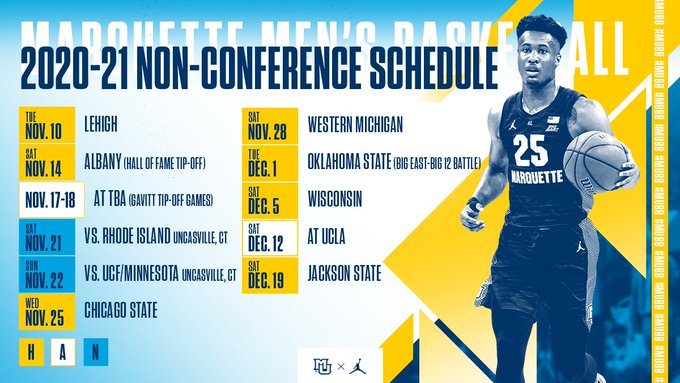
Marquette Twitter released their initial Non-Conference schedule today. While I plan to dig further into all the teams later in the year, I thought I'd give some rapid reactions since we've generally been starved of content for the past couple months. We'll do a quick hit on each team in the order they appear.

Lehigh: Under Brett Reed, Lehigh had never finished as a sub-300 kenpom team before. Frontcourt injuries were largely responsible for that, as they started off 3-10 without center Nic Lynch, won their next game with a full roster, then went 2-9 without forward James Karnik. They finished 5-3 with both healthy, but Karnik left for Boston College as a transfer. Most everyone else returns, so expect an improvement from Lehigh. Somewhere in the 200-250 range seems about right.

Albany: Marquette fans can empathize with the Albany faithful as a relatively successful season was derailed by a 6 game losing streak to end the year. They do return 5 players that started at least half their games a season ago and will hope Loyola-MD transfer Chuck Champion can help replace the scoring punch lost when PG Ahmad Clark graduated. Head Coach Will Brown will help his veteran group can return to the top-200 status they have usually enjoyed under his tenure.

Gavitt Game: We don't know the opponent yet, but I think I can round it down to one of three teams. First, Wisconsin is out since we already play them. Next, I expect Illinois, Iowa, Indiana, and Maryland to be on the road since all have already played 2 home games in the series. That leaves three teams that I expect to be playing home games: Michigan State, Purdue, and Rutgers. As Michigan State will likely get either Creighton or Villanova and Marquette has already played Purdue twice, my money is on a road game at the RAC.

Rhode Island: The Rams lost two starters to graduation and Jacob Toppin to transfer. This was already Fatts Russell's team and he will be on the short list for A-10 POY to start the season. Expect URI fans to make this a road environment for Marquette, but the greater talent will be on our side of the court. The danger is that URI is still an experienced team and will be a tough test. Winnable game, but certainly not easy.

UCF/Minnesota: The Knights, like Rhode Island, project as a middle-of-their-league team in a lesser league than the Big East. Johnny Dawkins has been a decent coach and returns most of last year's team, but the talent level has taken a hit from the team that took Duke to the limit in the last NCAA Tournament. They will be slow-paced and well-coached, but beatable. If it's Minnesota, they were the only top-50 kenpom team (#27) with a losing record last year. The Gophers have a solid backcourt in Marcus Carr and Gabe Kalscheur but lost the bulk of their frontcourt. Expect Western Michigan transfer Brandon Johnson to have a big role early on.

Chicago State: This is arguably the worst program in Division I. They had one player with an adjusted offensive rating over 90. This should be a mauling.

Western Michigan: I imagine this game may have been scheduled as the Vermont, Fresno, Buffalo, North Dakota State type of guarantee game three months ago. Then the Broncos' top two scorers transferred (including the aforementioned Brandon Johnson). Now Clayton Bates needs his very young but talented team to grow up quickly. Before slumping the past two years, WMU had been a top-200 team in kenpom 9 straight seasons. Unfortunately, those transfers will likely relegate them to the 200-300 range again.

Oklahoma State: This home game kicks off a brutal three-game stretch. The Cowboys had the look of a NCAA contender before their recent postseason ban. Now the best freshman in the country, Cade Cunningham, may be headed either to another program or the G-League academy. They still have Big 12 talent and a couple of potential breakout stars in Isaac Likekele and Yor Anei, but Cunningham was definitely the guy everyone would be coming to see. The good news is grad transfer sniper Ferron Flavors has committed to staying, but their fate hinges on Cunningham's decision.

UW-Madison: A lot will be expected from this Badger team that expects to start 5 seniors with a sixth expected to factor in off the bench. Expect them to start in the top 10-15 range and be the marquee name on the schedule. Greg Gard had them playing great down the stretch and they went 16-5 after Micah Potter entered the lineup. Definitely the toughest non-con test unless Michigan State's name shows up as that road Gavitt Game.

UCLA: After a dismal start under Mick Cronin, the Bruins bought in and finished the season on an 11-3 surge. Many had them pencilled into the top-20 before star recruit Daishen Nix left the program for the G-League academy. They still return virtually their entire rotation and add former five-star Kentucky recruit Johnny Juzang. This will be a tough road test to set the table for Big East play.

Jackson State: The obligatory punching bag game before Big East play truly starts, the Tigers will have some similarities to last year's Marquette team. Tristan Jarrett was fourth in the percent of shots taken nationally and will dominate the ball similar to how Markus Howard did, especially with second leading scorer Roland Griffin gone. They lose three other starters as well, so this should be a comfortable win.

Wednesday, April 29, 2020

#MUBB Happy Hour

So we did a thing, we organized a Zoom happy hour with notable Marquette social media "personalities" and we recorded it. Big thanks to Tim Blair, Ben Snider, Sam Newberry, Alan Bykowski, and Patrick Leary for joining the chat and raising the overall quality of the podcast considerably. I'd go through all the stuff we talked about but it was all over the map and you'll just have to listen.....what else you have to do? Enjoy!

https://scrambledeggs.podbean.com/mf/play/vuh6ca/MUBB_Happy_Hour_pod.mp3

Sunday, April 26, 2020

Final Revised Cards for Value Add Basketball Game (topped 30,000 clicks this weekend)

We managed to update the cards for the Value Add Basketball Game so click just this pdf to print out player cards for the 100 teams projected to make the 2020 NIT or NCAA, plus other great teams from the 1943 Wyoming Cowboys to the 2019 Virginia Cavaliers. The following are the three teams I feature on the update instructions for the free game, which was clicked on for the 30,000th time this weekend. No team was allowed to have more than one great team in the game from each century, so the Marquette 1977 and 2003 teams are also included, but Bill Walton's 1972 UCLA and the team they beat in my all-time tournament, Michael Jordan's 1982 UNC Tar Heels, are the only UCLA or UNC team from the 20th century.


Monday, April 13, 2020

Scrambled Eggs is still in quarantine but that doesn't mean we can't pod

The season ended really weird and we really haven't had the chance to talk about it. We get together and first discuss the end of what was shaping up to be a disappointing season for #mubb. We then talk about the Markus Howard era, what we'll remember and what Markus' legacy will be in the coming years. That conversation leads to yet another discussion of Wojo the coach, and what options Marquette really had given the financial state of affairs given the impact Covid-19 is having of society. We also talk the departure of Stan Johnson and the return of Justin Gainey. We close out the pod with a quick examination of the recruiting trail for Wojo, the players in the transfer market and what MU needs/wants right now. Generally, we keep it light so let's hope you enjoy!

https://scrambledeggs.podbean.com/mf/play/mx8xsc/scrambledeggs_edit_041220.mp3